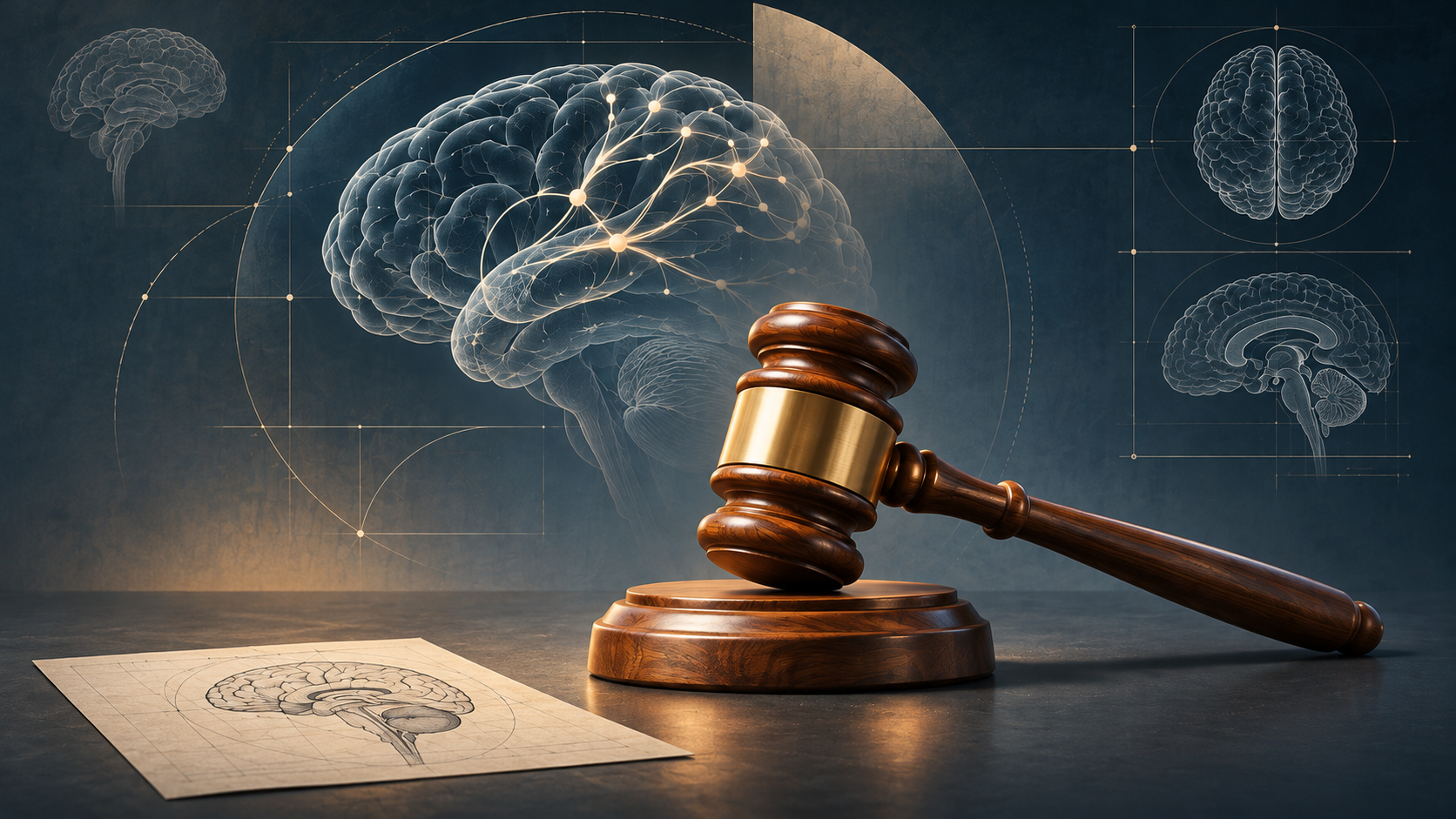
There is a piece of advice I consider so valuable that, if I could offer it in a single sentence, it would be this:
Put your thoughts on trial. Our minds are remarkably efficient storytellers. An ordinary event can become an elaborate narrative before we’ve considered whether our interpretation is even true. And all of this can occur before breakfast.
There is a term for the practice of examining our own thinking: metacognition. Simply put, it means thinking about thinking. It allows us to recognize our assumptions, question our interpretations, and exercise greater discernment over the conclusions we reach.
Cognitive behavioral therapy (CBT) applies this principle when examining how thoughts, emotions, and behaviors influence one another. Sometimes, our reactions reinforce the very assumptions that started the process.
Consider three common situations.
The Thought Cycle
1. Making a Mistake
Situation: You discover an error in an important project.
| Negative assumption | Unrealistically positive assumption | |
|---|---|---|
| Thought | “I can’t do anything right.” | “My work is excellent. It doesn’t matter.” |
| Feeling | Shame | Excessive confidence |
| Action | Abandon the project | Ignore the error |
| Behavior | Avoid similar challenges | Overlook details |
| Reinforced thought | “I’m incapable.” | “Nobody appreciates my work.” |
2. An Unexpected Meeting
Situation: Your boss says, “I’d like to speak with you this afternoon.”
| Negative assumption | Unrealistically positive assumption | |
|---|---|---|
| Thought | “I’m getting fired.” | “I’m getting promoted!” |
| Feeling | Dread | Excitement |
| Action | Spend hours worrying | Begin making plans |
| Behavior | Enter defensively | Arrive with expectations |
| Reinforced thought | “Unexpected meetings mean trouble.” | “Nothing ever works out.” |
3. An Incident on the Road
Situation: Another driver abruptly pulls out in front of you.
| Negative assumption | Unfounded positive assumption | |
|---|---|---|
| Thought | “What a selfish jerk!” | “They must have an emergency.” |
| Feeling | Anger | Sympathy |
| Action | React irritably | Excuse the maneuver |
| Behavior | Remain agitated | Dismiss the danger |
| Reinforced thought | “Everyone drives like a fool.” | “There’s always a good reason.” |
Now, let’s revisit that last example.
We have absolutely no idea why the driver pulled out in front of us. Perhaps they were distracted, made an innocent mistake, or acted with genuine disregard for others. Maybe they were rushing to the hospital.
The fact remains that we don’t know, and we don’t need to decide.
We can respond safely without assigning motives to a stranger. There is no obligation to become angry or invent a charitable explanation. Sometimes an event deserves nothing more than an appropriate response before we carry on with our day.
There’s a great deal of peace to be found in allowing an event to remain just that: an event.
Of course, these examples illustrate possibilities, not inevitable outcomes. An unrealistically positive assumption is not automatically a cognitive distortion, and a reinforced thought is not guaranteed. Our thoughts, emotions, and behaviors influence one another in ways that vary from person to person.
The Beck Institute’s Cognitive Model explains this relationship and the value of evaluating automatic thoughts to develop more accurate perspectives.
The important thing is recognizing how these experiences can reinforce one another.
And this, dear reader, is where we convene the court.
The Courtroom Technique
Before anything can stand trial, however, we must first recognize the thought.
Catching the thought is the first step, and in my experience, the hardest.
Automatic thoughts can move so quickly that we notice the resulting emotion before recognizing the assumption behind it. For overthinkers such as myself, learning to recognize them takes considerable practice.
Once we’ve caught one, the examination can begin.
1. The Incident — Establish the Facts
What actually happened? Remove assumptions and emotional commentary.
I made a mistake on my project.
2. The Prosecution: Present the Evidence
What facts support your interpretation? Is there a genuine problem? Remember, feelings are not proof.
3. The Defense: Challenge the Claim
What evidence contradicts it? Have you succeeded at similar tasks? Could there be another explanation?
4. The Jury: Weigh the Evidence
Consider both sides impartially. What conclusion would you reach if someone you loved presented these circumstances?
5. The Judge: Deliver the Verdict
Reach a reasonable, evidence-based conclusion.
I made an error. I can correct it, learn from it, and continue.
There. A perfectly respectable verdict, reached without unnecessary drama.
6. The Next Action: Proceed Accordingly
Respond to the facts. Correct the mistake, seek guidance if necessary, and carry on.
With practice, this process can help interrupt patterns that once seemed automatic.
A Personal Perspective
I came to appreciate this practice while attending therapy after over ten years of severe physical domestic violence and psychological abuse marked by narcissistic patterns of manipulation, humiliation, and coercive control. The resulting trauma was diagnosed as complex post-traumatic stress disorder (C-PTSD). Having explored different therapeutic approaches, CBT made the most meaningful difference in how I understood and responded to longstanding patterns of thought and cognitive distortions.
Retraining the way I thought required patience, repetition, and considerable self-awareness. Recognizing an automatic thought before allowing it to influence my emotions was especially challenging. I still have moments when I catch myself overthinking, but recognizing that and examining those thoughts before giving them more influence than they deserve is incredibly liberating and life-changing.
A 2024 study published in Science Advances, Different components of cognitive-behavioral therapy affect specific cognitive mechanisms, examined how different CBT techniques influence thinking patterns. Researchers observed that a cognitive restructuring intervention reduced participants’ tendency to attribute negative everyday events to themselves. Read the scientific study or find it on Google Scholar.
A Final Thought
Not every passing thought warrants an investigation. But when an assumption begins disturbing our peace, influencing our judgment, or directing our behavior, perhaps it deserves a closer look.
While I appreciate a positive outlook, I believe there is equal wisdom in acknowledging reality. Sometimes our concerns are justified. Sometimes our expectations are unfounded. Other times, we simply don’t have enough information to reach a conclusion.
We can be hopeful without making promises to ourselves that life hasn’t made. We can acknowledge disappointment without allowing it to define our circumstances.
A thought may be persuasive, persistent, and thoroughly convincing. That doesn’t necessarily make it true.
And before we allow it to govern the next chapter of our day, perhaps we ought to ask it to present its evidence.
The object of this exercise is truth, not compulsory positivity.
Until next time, may your thoughts be kind and your verdicts fair.